Monday, 11 August 2014

Salad Dressing Recipe Template

I was recently treated to a beautiful spread of Vegan Food daily during a trip away to Barrington Tops;  my husband & I attended a group gathering there run by Jesus & Mary & it was such a treat to have such delicious Vegan food for the entire 9 days....not often so readily available when travelling away, so a Big Thank You to Mary for organising this for everyone.
Naturally an array of fresh salads accompanied our main meal each day &  it reminded me of all the infinite salad dressings just waiting to be created it our kitchens, & how easy it can be once you have a template. This can change the flavors of salads & live foods every day of the week so it is well worth experimenting & bringing out your creative side.

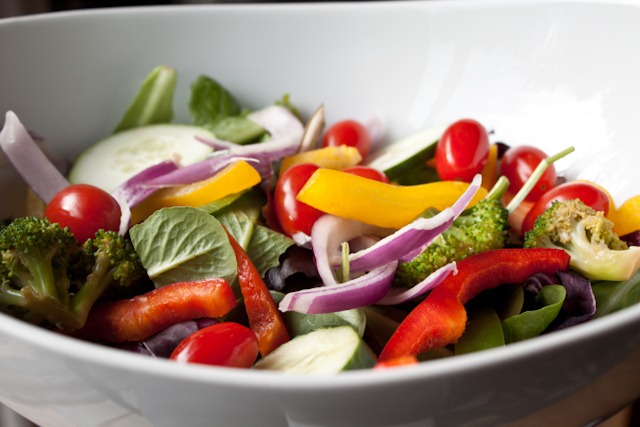
salad-01salad-10

salad-04
These Pictures are from the Internet...I keep promising myself I will photograph my own next time!


It only takes a matter of minutes to make your own dressing & this way it is easy to keep an eye on your ingredients. Just run your eye down the list of chemical lab produced products in a bottle of Supermarket Dressing & I guarantee many of the 15-20 ingredients will even be evasive on an Internet search...Whow!

I encourage you to step out of your comfort zone and try making a few dressings of your own.You just    might surprise yourself! Trust me, you are listening to someone who grew up on boiled homemade              mayonaise, & that was the only choice but at least it was a reasonably healthy concoction & Mum didn't        head to the Dressing Isle with its sugar laden options ....                                                                                                        
Below you will find the 5 ingredients broken down into 5 categories, along with a few examples to help you get your thought process moving.
_____________________________________________________________________
Groups A, B, & C are the main ingredients. D & E are items added depending on mood or salad.
(A) Oils/Fats – Olive oil, Hemp & Flax oil, Coconut oil, Nut butters, Tahini, Sesame seeds, Sunflower seeds, Pumpkins seeds, Pinenuts, Almonds, Cashews, Macadamia nuts, Avocado
(B)  Salts – Celtic Sea salt, Crystal salts, Nama Shoyu, Miso, Sea vegetables
(C)  Acids – Lemon, Lime, Orange, Grapefruit, Tomato, Sauerkraut, Apple Cider Vinegar
(D)  Sweets – Dates, Figs, Dried Fruit, Honey, Orange, Berries, Papaya, Mangos
(E)  Aromatics – Herbs & Spices – Garlic, Ginger, Onion, Chili, Peppers, Cayenne, Basil, Oregano, Thyme, Dill, Mint, Curry, Sun Dried tomatoes
_____________________________________________________________________
Extra ingredients but not limited to:
  • chopped shallots, scallions, or sweet onion
  • minced garlic
  • grated ginger (nice in lime-based dressing on simple green salad with nectarines)
  • chopped fresh herbs like chives, chervil, mint, and/or parsley (mint is especially nice with citrus)
  • a tablespoon of whole grain mustard
  • a tablespoon of flaked nutritional yeast (adds a cheesy flavor)

Tips:
  1. Add water when possible to most dressings to allow for the use of less oil.  Personally, I love using avocados in place of an oil.  The calories and fat grams will lower if you are looking for a lower calorie alternative.  If you use avocados, make sure to add them as the last ingredient.   If you over blend them it can affect the flavor and texture.
  2. Always add the acids (C) last because that will make the dressings thicker and creamier.
  3. Using a blender will help you achieve a creamier dressing but if you don’t have access to one a mason jar will work.  Just add your ingredients, put the lid on and shake away.
  4. Creamy dressings will stick to the greens in your salad better and prevent a puddle in the bottom of your dish.
  5. Soaking nuts that you may use in your dressings is beneficial for a couple of reasons.  One being that soaking most nuts releases the enzyme inhibitors making them easier to digest and also soaking the nuts will help to soften them a bit for blending purposes.  This will help to avoid a gritty dressing.
  6. The addition of a little mustard helps bind oil and vinegar together, making for a more stable emulsion.
  7. The ratio for a vinaigrette is typically 3 parts oil to 1 part vinegar or lemon juice, etc..
  8. Make a quick avocado dressing by combining half an avocado with a cup of vinaigrette in a blender or food processor. Process until smooth.


Dressing your salads:
  1. Leafy salads should always be dressed at the last possible minute.
  2. I can’t emphasize enough the importance of thoroughly drying all salad ingredients before dressing them.  The best dressing in the world can’t save a salad if the greens haven’t been thoroughly dried. Invest in a salad spinner, it is essential kitchen equipment.
  3. Bold greens such as peppery arugula or bitter chicory with an equally assertive dressing; e.g. balsamic vinaigrette.
  4. Tender, mild lettuces — butter or Bibb lettuces or baby greens, for instance — are best treated with more delicacy. Lemon juice or a mild vinegar such as white wine, champagne or rice wine are most appropriate.
  5. Romaine and other crisp, mildly flavored lettuces have an affinity for creamy dressings. Similarly, stronger flavored, fleshier greens beg for a more generous hand with the dressing; greens more delicate in flavor and substance are better when lightly dressed.
  6. When purchasing your greens a heavier head indicates freshness, also look for crisp leaves.  There shouldn’t be any bruising or browning on the leaves.  Look at the base of the greens,  there shouldn’t be much browning, if there is, it means that it has been sitting around longer after harvesting.

A word on reducing oils:
  • Olive oil is a classic, but it might not be the flavor you’re looking for. Avocado oil is another smooth, richly flavored option, but I think my favorite is possibly Macadamia oil although there are numerous others you may prefer. Changing them regularly rather than always using the same one is a good idea.
  • Walnut oil (or another nut oil) is a nicely flavored option.
  • Seed oils like hemp, flaxseed, or grapeseed oil are delicious choices.
  • When reducing oils in your dressing to cut calories adding chutney or  mustard, which will add flavor and help to emulsify the other ingredients.  Choose strong flavored oils such as toasted sesame, walnut or peppery extra virgin olive oil that, even when used sparingly, contribute a lot of flavor to dressings.  Treat yourself to premium vinegars such as aged balsamic vinegar, which is concentrated and low acid. You’ll be able to get by with less (or even no) oil if the vinegar you use isn’t too puckering.  Find your light dressing too tart? Add a pinch of sweetener to offset the acidity of the vinegar.
  • Carotenoids, found in salad leaves, are best absorbed when eaten with a little oil. Try adding delicious oil-based dressings, or even an avocado with its healthy monounsaturated fats, to maximize their availability
Template Examples:
Here are some examples of combinations that can be made but don’t limit yourself to just these.  Dressings are best made in a blender, but can be whisked if you do not have one.

  • Basic Tahini – Water, Tahini, Nama Shoyu, Lemon juice, Garlic (this goes well when served on baby spinach and an onion salad)
  • Spicy Thai – Olive oil, Almond butter, Nama shoyu, lime juice, honey, ginger, garlic and thai pepper (this is yum served on cabbage, bok choy, raisins, coconut and scallions)
  • Date dressing – Water, olive oil, miso, lemon juice, dates and garlic (lovely on a mixture of baby greens)
  • Creamy Italian – Water, macadamia nuts, celtic salt, apple cider vinegar, garlic, basil and oregano
  • Tropical Vinagrette – Flax oil, celtic salt, apple cider vinegar, mangos, papaya, mint and garlic
  • Sun Dried Dream – Cashews, celtic salt, grapefruit juice, apple cider vinegar and sun-dried tomatoes
  • Ageless – Water, sesame seeds, miso, sauerkraut, garlic
  • Avo Dressing Avocado, celtic salt and lemon juice
  • Curry Cream – Tahini, celtic salt, orange juice, ginger and curry

Sunday, 20 July 2014


I don't know about you, but I love olives .........


There is a deep and diverse mythology surrounding ‘the first of all trees’

'The Olive Orchard’ (1889) by Vincent Van Gogh

The wild olive (Olea europaea) has been around for at least 50,000 years, and there are groves of wild trees from Anatolia through the Aegean and Mediterranean. The Roman agricultural writer and theorist Lucius Junius Moderatus Columella (AD4-c.AD70) described the olive tree as “Olea prima omnium arborum est” (the olive is the first of all trees) in his agricultural treatise De Re Rustica. By the time of his observation, the olive had been in commercial cultivation for several thousand years. Archaeologists have excavated olive pits at sites that are 8,000 years old. The first evidence of olive oil production was found at a 6,000-year-old site at Carmel in Israel.

Olive tree pruners in Italy, 1894

The exact origins of the domesticated olive, which has noticeably larger and juicier fruit than its wild ancestors, has long been the source of scientific debate. The general consensus for many years was that they were probably first cultivated in the Levant region. Recent analysis by the National Centre for Scientific Research in France has narrowed the origins even further.
The olive was one of three trees (the others being the cypress and cedar) that sprang from seeds from the Tree of Knowledge
The research team took samples from 1,263 wild olives and 534 cultivated plants from across the Mediterranean, and studied the genetic material from the chloroplast (the structures where photosynthesis happens). Chloroplast DNA is passed on to descendent trees, so the team were able to track variations in the lineage of trees, pinning down the change from the bitter, small and hard wild olive fruit to larger oil-rich olives to Anatolia and the borderland between Turkey and Syria. From there, domesticated olive varieties were developed further in three key geographical areas – either side of the Strait of Gibraltar, the near east and the area around the Aegean.

Detail of Noah on mosaic at St Mark’s in Venice

The economic and cultural importance of olives has ensured that the mythology surrounding the tree is deep, varied and entirely without regard for social or religious boundaries. Reportedly the olive was one of three trees (the others being the cypress and cedar) that sprang from seeds from the Tree of Knowledge sown by Adam’s son. An olive branch in the beak of a dove marked the end of the biblical flood, and has for centuries been a symbol of peace.
There are depictions of olive oil production in ancient Egyptian art, and a tool for pressing oil found among grave goods. Tutankhamun wore a crown woven with olive leaves, and Ramses III presented olive branches to Ra, the sun god, as a symbol of enlightenment.

A Greek amphora depicting an olive harvest in the 6th century BC

The olive reached its mythological zenith during the time of the ancient Greeks. Zeus offered Athena the guardianship of the city of Atikka in return for the gift of a grafted olive tree, which he deemed more valuable than Poseidon’s offering of a powerful war horse.
Athena’s tree was reputedly planted in the Acropolis but was burnt to the ground during the Persian invasion of 480BC. The blackened tree was abandoned to the smouldering ruins but began to produce new shoots, from which, legend has it, every olive in Greece is propagated. Such a high value was placed on the olive that the Constitution of Athens was amended during the time of Solon (638BC-558BC) to include a law covering the cutting of olive trees. Regardless of whether the tree was on public land or in private ownership, a guilty verdict meant the death penalty for the culprit.

Harvested olives in Greece

As much as Solon’s law was recognition of the religious and cultural significance of the olive tree, it would have surely been aimed also at protecting the economic advantage gained from a vibrant olive oil industry. The Cretans and Phoenicians were the great oil salesmen of their day, trading throughout the Mediterranean. By the time of the Romans, olive oil production was codified and classified into 10 different grades. As ever, the slaves had the worst of it – their oil, known as “cibbarim”, was made from diseased fruit.
Olives became global plants from the mid-1600s, firstly as introductions to Latin America, then from the late 18th century to California, China and Japan.

Olive tree in a commercial grove in California
Olive tree in a commercial grove 

The appreciation of the olive as an ornamental plant is more recent. Its silvery grey foliage is handsome but unremarkable – though it can be cut to a variety of topiary shapes. Flowers are inconspicuous, fruit never guaranteed in cooler climes. Drought tolerance makes them suitable for locations where heat and light exposure pose problems, such as roof terraces. Smaller plants can be arranged and clipped into hedges, creating a drought-proof alternative to buxus.
In the medieval town of Pollensa there is an olive tree that seems to be clinging on to life by divine providence alone
The real interest and aesthetic value lies, however, in the trunks of old trees. The combination of a hard life and repeated pruning (aimed at maintaining a manageable crown for easier harvesting) results in trunks that are squat, contorted and fissured, their history worn in craggy glory. There are notable examples throughout the Mediterranean and beyond.

Even as far north as Britain there are elderly olives to be admired. The largest is at Chelsea Physic Garden on the Embankment in London. Great uncertainty exists over the age of this tree (it is certainly more than 100 years old) but, remarkably, it often produces viable fruit in the comparatively balmy microclimate of the garden. Enough, in a good year, to make one whole jam jar full of oil.
The large, aged olive trees that can now be obtained at nurseries and garden centres are often a consequence of commercial imperative. As soon as the productivity of an individual tree declines, its number is up. In the past, trees would often be cut down and burnt but now the emergence of a market hungry for old trees with character has offered them a reprieve. A naturally shallow root system makes them relatively easy to lift and transport too. So a tree born on a Greek hillside in the years before the Battle of Hastings could conceivably end its days actually in Hastings.

Monday, 14 July 2014

Homemade Remedies for the Veggie Patch


                          Raw Foodies love their Veggies so here are a few tips for growing healthy plants at home.


How to Stop the Bugs From Eating a Vegetable Garden thumbnail
Some insects, such as ladybugs, are beneficial to your garden.


Insect infestations can be a common problem in vegetable gardens. Some bug species will eat the fruit produced by your plants, while others weaken the plant by chewing the leaves and stems or even the roots. To stop bugs from destroying your vegetable garden, gardeners can use a combination of ideas without resorting to pesticides & chemicals. 


With companion planting  we often avoid too many problems in the veggie patch from marauding insects & bugs; Gardening Australia has many recommendations but to give you a basic idea, here are a few examples.
The picture is from the same Resource.

PlantGood NeighboursHow it worksBad Neighbours
AppleNasturtium, ChivesNasturtium climbs tree and is said to repel codling mothPotatoes
ApricotBasil, Tansy, AsparagusBasil and tansy are said to repel damaging insects
AsparagusApricot, Basil, Chives, Comfrey, Lovage, Marjoram, Parsley, TomatoesBasil and Parsley are said to improve flavour. Onions and garlic release substances reducing growth.Garlic, Onions
Balm (Lemon)TomatoesAttracts bees, said to enhance flavour and growth
BasilTomatoesBasil said to repel flies and mosquitoes
Beans (climbing)Broccoli, Brussel Sprouts, Cabbage, Carrots, Cauliflower, Corn, Lettuce, Lovage, Majoram, ParsleyBeetroot, Chives, Garlic, Gladiolus, Onions, Sunflower
BeetrootBeans (bush), Broccoli, Brussel Sprouts, Cabbage, Cauliflower, Kohl Rabi, Lettuce, Lovage, Marjoram, Onion, Peas, Potato, Spinach, SilverbeetBad Neighbours roots release substances reducing growthBeans (Climbing), Tomato
BorageSquash, Strawberries, TomatoSaid to deter tomato worm and improve tomato flavour and yield. Said to increase strawberry yield.
Brassicas (Incl: Broccoli, Cabbage, Cauliflower)Beans, Beetroot, Carrots, Chamomile, Coriander, Cucumber, Dill, Lettuce, Lovage, Marjoram, Marigold (French), Mint, Nasturtium, Pea, Potato, Rosemary, Sage, Tansy, Thyme,TomatoZinniasDill attracts a Cabbage White Butterfly controlling wasp. Nasturtium disguises and repels aphids. Sage repels the Cabbage White Butterfly. Zinnias attract ladybirds, which we love! Bad Neighbours roots release substances reducing growthGarlic, Rue, Strawberry
Capsicum, ChilliCarrots, Onions, Tomato
CarrotsBeans, Chives, Coriander, Cucumber, Leeks, Lettuce, Lovage, Marjoram, Onion, Pea, Radish, Rosemary, Sage, TomatoBad Neighbours roots release substances reducing growthDill, Celery
CeleryCabbage, Chives, Dill, Dwarf Beans, Leek, Lovage, Majoram, Onion, Pea, Sage, Spinach, TomatoBad Neighbours roots release substances reducing growthCarrots, Parsnip, Potato
ChamomileCabbage, OnionDeters flies and mosquitoes. Strengthens neighbouring plants
ChivesApples, Cucumbers, Lettuce, PeasPrevents Apple Scab. Said to deter aphidsBeans
CucumberBasil, Bens, Borage, Broccoli, Brussel Sprouts, Cabbage, Carrot, Cauliflower, Corn, Dill Kohl Rabi, Lettuce, Lovage, Marjoram, Nasturtium, Parsnip, Pea, Radish, Sunflower, TansyBad Neighbours roots release substances reducing growthPotato, Sage, Strongly Aromatic Herbs
DillBrassicas (Incl: Broccoli, Cabbage, Cauliflower)Dill attracts a Cabbage White Butterfly controlling wasp
EggplantBeans, Spinach
GarlicApricot, Cherry, Mulberry, Parsnip, Peach, Pear, Raspberry, Rosemary, RoseDeters aphids, especially from roses and raspberry. Repels Cabbage White ButterflyBeans, Cabbage, Peas, Strawberry
Kohl RabiBeetroot, OnionBeans, Tomato
LeekCarrot, Celery, Lovage, Majoram, Onion, Parsnip, StrawberryBeans, Peas, Parsley
LettuceAchillea, Beans, Beetroot, Cabbage, Carrot, Chervil, Coreopsis, Cucumber, Lovage, Marjoram, Marigold (French), Onion, Parsnip, Pea, Radish, Strawberry, ZinniaAchillea, Coreopsis & Zinnia attract pollinators and offer shade for lettuceParsley
Marigolds (French)Numerous vegetables, including tomatoKills root knot nematodes and eel worm
MelonRadish, Sweet Corn
MintCabbage, TomatoDeters pests such as Cabbage White Butterfly, ants and fleas
NasturtiumCabbages, Fruit Trees, Radishes, ZucchiniFlowers repel aphids and codling moth. Cabbage white butterfly is attracted to this plant, and will seek it out over cabbages
OnionBeetroot, Broccoli, Cabbage, Carrot, Chamomile, Leeks, Lettuce, Lovage, Marjoram, Parsley, Parsnip, Silverbeet, Strawberry, Summer Savory, TomatoSmell of onion said to deter numerous pestsOnions release substances reducing growth of Bad NeighboursAsparagus, Beans, Gladioli, Peas
ParsleyAsparagus, Sweet Corn, TomatoSaid to improve flavour of asparagus and tomato
PeasBeans, Beetroot, Brussel Sprouts, Cabbage, Carrot, Cauliflower, Celery, Cucumber, Lettuce, Lovage, Marjoram, Parsnip, Potato, Radish, Sage, Squash, Sweet CornBad Neighbours roots release substances reducing growth. Sweet Corn has traditionally been used as “living stakes” for peasChives, Garlic, Onion, Shallots
PotatoBeans, Broccoli, Brussel Sprouts, Cabbage, Cauliflower, Corn, Eggplant, Horseradish, Lovage, Marjoram, Marigold (French), Nasturtium, Parsnip, Peas, Sweet Alyssum, Sweet Corn, WatermelonSweet Alyssum and Marigolds attract beneficials and suppress weedsPotatoes release substances reducing growth of Bad Neighbours. Horseradish should be planted at the corners of the patchApple, Celery, Cherry, Cucumber, Pumpkin, Raspberry, Rosemary, Squash, Sunflower, Tomato
PumpkinBeans, Cabbage, Eggplant, Peas, Radish, Sweet CornBad Neighbours roots release substances reducing growthPotato
RadishBeans, Carrot, Chervil, Cucumber, Sweet Corn, Cucumber, Lettuce, Lovage, Marjoram, Nasturtium, Parsnip, Pea, Spinach, Sweet CornRadish is said to attract leaf miners from SpinachHyssop
RaspberryBlackberries, Potato, Tomato
RosemaryBeans, Cabbage, Carrot, SageSaid to deter Cabbage white butterfly. Attracts beneficials
SageBrassicas (Incl: Broccoli, Cabbage, Cauliflower), Carrot, RosemarySage repels the Cabbage White ButterflyCucumber
SilverbeetBeetroot, Cherry, Lavender, Lovage, Marjoram, OnionBasil, Wormwood
SpinachCelery, Eggplant, Strawberries
SquashBorage, Lovage, Marjoram, Nasturtium, Peas, Sunflower, Sweet Corn, TansyPotato
StrawberryBeans, Borage, Chives, Leek, Lettuce, Marigold (French), Onion, Pyrethrum, Sage, SpinachBrassicas (Incl: Broccoli, Cabbage, Cauliflower), Brussel Sprouts, Garlic
SunflowerApricots, Cucumbers, SquashBeans, Potato
Sweet CornBeans, Cucumbers, Lovage, Marjoram, Melon, Parsnip, Peas, Potato, Pumpkin, Radish, Squash, ZucchiniSweet Corn has traditionally been used as “living stakes” for peas. Bad Neighbours roots release substances reducing growthCabbage
TomatoAsparagus, Basil, Celery, Borage, Broccoli, Brussel Sprouts, Cabbage, Carrot, Cauliflower, Celery, Chives, Dill, Gooseberry, Grape, Hyssop, Lovage, Mariglod (French), Marjoram, Mint, Nasturtium, Onion, Parsley, Parsnip, TurnipMarigolds said to repel white fly and root knot nematode. Bad Neighbours roots release substances reducing growthApricots, Beetroot,  Fennel, Kohl Rabi, Potato, Rosemary, Sweet Corn


                                    Some find mixing every plant species together helps prevent infestations


There are a few other possible considerations if all else fails.
This may seem like a rather strange idea, but when insect pests invade plants it is worth thinking about what emotions are running in regard to the garden. If this is happening for me, I often find I am over zealous in looking after the plants & am aware that I have great expectations of a fine crop up the track! You probably know the blurb.....Grow... Grow.... Grow... as you water & tender the crop......in other words a Demanding Attitude is simply pouring out of me; after all, think of all the hard work I have put in !!
On the other hand,whenever I throw seeds to the wind so to speak & forget about the results, knowing there will be plenty for the rabbits & insects & anyone dropping by as well as our family, abundance seems almost inevitable!! Try looking at your emotions, as you may be surprised at the result.
If this isn't working for you, it's always good to have an alternative & great to only resort to home-made remedies where possible, because they're generally safer for the environment and more economical. However  "Be careful of these solutions around children, as they should not be ingested. Don't store them in soft drink bottles and make sure you keep them out of reach of children.

Here are some simple suggestions;

Scale and Mealybugs: Make an oil preparation that suffocates them by mixing four tablespoons of dishwashing liquid into one cup of vegetable oil. Mix one part of that mixture to about twenty parts of water, put it in your sprayer and spray the affected plants.

Aphids, Caterpillars and Other Insects: Add two tablespoons of soap flakes to one litre of water and stir thoroughly until completely dissolved (this is quicker in warm water). There is no need to dilute this further, just spray it on as is.

Black Spot Fungicide: In Queensland, Black Spot's a major problem with roses, but this fungicide mixture works miracles. Add three teaspoons of bicarb soda to one litre of water. Don't get carried away with the bicarb soda because if you make it too strong, it'll cause all sorts of problems. Add a few drops of either dishwashing liquid, or fish emulsion to help the solution adhere to the leaf more effectively.

Fungicide: Mix one level teaspoon of bicarb soda into one litre of water. Add one litre of skim milk and a pinch of Condy's Crystals which you can get from a produce agent (someone that supplies to horse owners). Shake thoroughly.

Grasshopper, Caterpillar and Possum Deterrent: Mix a cup of molasses into one litre of water and spray it over new foliage.

Nematodes: Add half a litre of molasses to two litres of water and spread over one and a half square metres of affected garden area.

All-round Insecticide: Chop four large onions, two cloves of garlic, and four hot chillies. Mix them together and cover with warm, soapy water and leave it to stand overnight. Strain off that liquid and add it to five litres of water to create an all-round insecticide.

Pesticide: Crush a whole bulb of garlic and cover with vegetable oil. After two days, strain off the liquid, add a couple of drops of dishwashing liquid and use one millilitre of concentrate to one litre of water.

Herbicide: Add a cup of common salt to a litre of vinegar. After it's dissolved, brush it directly onto weeds. Remember, it's not a selective weed killer. It'll kill anything it touches so be very careful how you use it.

Predator Attractor: Predators that prey on pests are great things to have in the garden. Lacewings are particularly desirable because they consume aphids and many other pests. To encourage them into your garden, dissolve one teaspoon of a yeast based sandwich spread in water and spray it all over the plants.

Even the most common foods and products can affect you and your plants. It is good practice with any homemade remedy to first spray a test patch on the target crop and wait 24 hours before checking the sprayed foliage for damage, before proceeding.

Thursday, 3 July 2014

Anyone for some delicious Broad Beans


Have you ever wondered what to do with Broad Beans (often referred to as  Edamame Beans or Green Soya Beans) What a yummy treat one may be missing out on if you have never eaten them.These young beans can be purchased frozen if you do not wish to grow them, & I just soak them in warm water & squeeze their rather fibrous outer shell off them to expose the young fresh bean.                                                                                                           ( some people leave the shell on)


If you are not strictly a Raw Foodie the salad is delicious served with added lightly steamed greens & some Quinoa or rolled up in a Rice Paper Wrap

Salad ingredients:
5-6 carrots peeled + cut into matchsticks
1 cup frozen shelled edamame/broad beans, thawed
1/4 cup black sesame seeds
big handful of coriander leaves, roughly chopped (mint or basil would also be delicious)
salt + pepper
1/2 ripe avocado, peeled + chopped

Ginger Citrus Dressing:
1/4 cup fresh orange juice
juice of 1 lime
salt + pepper
1.5 tbsp agave nectar/raw honey
1 inch piece of ginger, peeled and grated finely on a rasp/microplane
couple drops of toasted sesame oil
1/4-1/3 cup grapeseed or other neutral-tasting oil

Combine the carrot matchsticks, thawed edamame/broad beans, sesame seeds and chopped coriander in a large bowl. Season the whole mixture with salt + pepper and toss lightly with your hands. Set aside.
In a small-medium bowl, combine the orange juice, lime juice, salt + pepper, agave nectar, ginger and sesame oil. Whisk it all together until incorporated. While whisking with one hand, slowly drizzle in the grapeseed oil until you have a homogenous and unified dressing.
Pour the dressing over the carrot + edamame/broad bean mixture. Toss to combine. Top with the chopped avocado pieces. Garnish the dish with more sesame seeds and coriander if you like

NB. Coriander is also known in Northern Hemisphere circles as Cilantro

Thursday, 19 June 2014

The Muse Private School In USA implements a Vegan diet for it's Students


This is quite a long article by Eliza Barclay backing a School in the USA to terminate meat & dairy on the school menu.( 8th June 2014)  I found it an inspiring report & wonder how long it might be before other Schools follow suit.
I was particularly touched by the comment that so many of us consider or like to think of ourselves as Environmentalists, & yet in many households, animal products are still consumed....food for thought most certainly!

Suzy Amis Cameron, wife of director James Cameron, and gardener and educator Paul Hudak inspect seedlings in the MUSE School CA greenhouse in Calabasas, Calif. Amis Cameron, who founded the school with her sister, wants the school menu to be entirely plant-based by fall 2015.

Suzy Amis Cameron, wife of director James Cameron, and gardener and educator Paul Hudak inspect seedlings in the MUSE School CA greenhouse in Calabasas, Calif. Amis Cameron, who founded the school with her sister, wants the school menu to be entirely plant-based by fall 2015.
Eliza Barclay/NPR
As we've been reporting, the quest to get more fruits, vegetables and whole grains into public schools has once again gotten political.
But in spite of the new, federal standards for school nutrition, "changing a school lunch cafeteria, especially those that participate in the National School Lunch Program, it is like turning around the Titanic," says Susan Levin, director of nutrition for the Physicians Committee for Responsible Education.
However, if you happen to have performed in the movie Titanic, as Suzy Amis Cameron did, and you happen to have founded a private school that you and your world-famous director husband support, as Amis Cameron also has, then maybe revamping a school cafeteria isn't such a tall task. You might even be able to eliminate meat and dairy altogether, and create the first plant-based school in the U.S.
A lot of schools lately have been making incremental changes toward more plant-based options, says Levin. Take the Meatless Monday program, which is now in hundreds of K-12 public and private schools. One public school, P.S. 24, in Flushing, N.Y., even went completely vegetarian.
But Amis Cameron's plan for MUSE School CA, the environmentally focused school in Calabasas, Calif., that she founded with her sister, Rebecca Amis, in 2006, is even more ambitious.
"We are gradually moving toward a plant-based menu because we do call ourselves an environmental school," Amis Cameron tells The Salt. "Within the next year and a half, we will be plant-based."
SOAR Charter school in Denver, Colo., is one of many schools that's serving more vegetarian meals. Keshan Pride, 6 (in blue), looks over his choices during lunchtime in 2011.i
SOAR Charter school in Denver, Colo., is one of many schools that's serving more vegetarian meals. Keshan Pride, 6 (in blue), looks over his choices during lunchtime in 2011.
Helen H. Richardson/The Denver Post/Getty Images
Private schools like MUSE School CA, of course, have a lot more flexibility when it comes to deciding what goes on, and what comes off, the menu.
Already, the school has a strong seed-to-table program that's producing fresh fruits and vegetables grown by its 140 students. They're guided by the school's full-time, year-round gardener and educator, Paul Hudak.
He and students at the school's two campuses in Malibu Canyon have built 28 raised beds to grow peppers, greens, tomatoes, herbs and other edibles, plus flowers. The older students will also be selling some of the food grown over the summer to local restaurants.
Hudak says now that the schools are growing produce year-round, they can supply up to 20 percent of the food consumed in the cafeterias, depending on the season. "Once we really get cranking, I think we'll be up to 40 or 50 percent," Hudak says.
The Origins Of MUSE School CA
Food played a role in sparking Amis Cameron's motivation to start the school in the first place. She and her husband, James Cameron, one of the world's most successful directors (yes, Avatar, the Terminator films and Titantic), have five children, including one from her previous marriage. The family splits its time between their home in Malibu, their ranch in Santa Barbara and their 3,500-acre farm in New Zealand.
As she phased out modeling and acting in the late '90s, Amis Cameron focused on her children and their education. And as she did, she says, she became increasingly frustrated with the schools they were in: "They were really wanting to put our children in a box."
Then, in 2005, Amis Cameron was driving her 4-year-old daughter home from school and heard her daughter describe a math lesson with candy.
"The school she was going to — that touted itself as an environmental school — was teaching my child to count with M&M's," Amis Cameron says. "And everything in my life came to a screeching halt."
She and James started talking about the possibility of starting their own school for their children and other kids whose parents were looking for an alternative to the schools in Malibu.
"Jim was trying to decide between doing more deep-ocean exploration, or make a little film called Avatar," says Amis Cameron. "He decided to make Avatar, and I decided to start MUSE. And off we went in our different ventures. Now, nine to 10 years later, it's all coming full circle, dovetailing."
While MUSE School CA has grown to 140 students — two are Camerons, and half receive financial aid — it's still not an accredited school, though Amis Cameron says they're working on that.
She and her sister, Rebecca, have tried to walk the sustainability talk on campus, using recycled materials to build the classrooms, installing solar "flowers" designed and donated by James to power the school with renewable energy, and by hiring a resident falconer whose hawks eat rodents and eliminate the need for pesticides.
The Camerons Go Vegan
Over time, the Camerons' environmentalism — which features heavily in the ecological destruction narrative of Avatar — has become more and more centered around food.
The turn happened, Amis Cameron says, when the couple went vegan in 2012 after watching the documentary Forks Over Knives. The film emphasizes the health benefits of a plant-based diet, and that initially compelled them to empty the cupboards and fridges of all dairy and meat products.
"But what has really been a major eye opener is the connection between food and the environment," says Amis Cameron. "Now, we're benefiting greatly from eating plant-based, as are our children, but the environmental piece has become really our sole focus."
Specifically, Amis Cameron says, she's appalled by all of the water and grain it takes to produce meat and dairy, and all of the greenhouse gas emissions, waste and pollution that production generates. And everything she's learned lately about animal products and the environment has coalesced into a singular conviction: "You can't really call yourself an environmentalist if you're still consuming animals. You just can't."
While there is a consensus that the meat industry has taken a heavy toll on the environment, few people agree on what to do about it.
And many environmental scientists are not convinced the solution is for everyone to give up animal products — especially people in the developing world who haven't had ready access to them.
One recent study we reported on argued that to prevent more greenhouse gas emissions from the livestock sector, we'll get the biggest bang for the buck by helping producers become more efficient and keeping land from being converted for grazing. The researchers say that while consumers in rich countries could stand to eat less meat, it's not realistic to expect us to give it up entirely.
"It's not a matter of giving up meat. It's a matter of shifting to other kinds that have less climate impacts," one scientist told us. So, not as much beef and pork, and maybe more farmed fish and insects.
But Amis Cameron, like a lot of other activistswe've interviewed, argues that avoiding animal products is still the most powerful decision a consumer can make — more significant than buying a hybrid car or LED light bulbs.
In addition to transforming MUSE School CA into a vegan school, Amis Cameron is writing books on the environmental impacts of meat production for different demographics — moms, teens, children and thought leaders, she says. The Camerons also regularly give speeches where they talk about their newfound veganism and why they're primarily motivated by concern for the planet.
"Any extra bandwidth that we have is spent on that piece and ... bringing that message out into the world," she says. "We have an amazing platform."
But even with all their influence, Amis Cameron admits that it hasn't been easy to convince other parents at MUSE School CA that the chicken, turkey and cheese currently served at the school have to go.
"Food is a very sensitive subject for so many people," she says. "People have their cultural reasons for eating meat, their traditional reasons, their likes and dislikes. But slowly we are offering educational programs through MUSE, for not only the children, mainly for the grownups, because the children, they live and breath [the environmental way] already."
Is Vegan Healthy For Kids?
Levin of PCRM says that a vegan diet can be healthy for kids — even the Academy of Nutrition and Dietetics has ruled that kids can get everything they need from plants alone.
"Most people assume it's so hard to make kids eat vegan — that it's easier to give them the chicken nuggets and the milk, and the cheese," says Levin. "But I don't think anyone could defend that they would be less healthy by not consuming animal products."
And while Levin sees MUSE School CA's move toward a vegan menu as an anomaly, she says she applauds what Amis Cameron is doing.
"They might be in a privileged position to advocate for dietary choice, but it ultimately shows other people how effective it is," says Levin.
And, Levin adds, many plant-based foods, like rice and beans, aren't prohibitively expensive for schools. "It shouldn't be an entitled program. You don't have to be rich to be plant-based."
The Camerons were the initial MUSE School CA donors, and continue to supply startup funds as the school has expanded from elementary to middle to a high school slated to open this fall. But Amis Cameron says the plan is for the school to become self-sustaining.
"We've capped what we give, and we decrease the amount every year," she says. "But, gosh, it's a great place to be a philanthropist."

Tuesday, 10 June 2014

Lets Use up some of our Almond or Coconut Pulp


Hello Everyone,
I seem to be back online after quite a number of weeks of confusion !! My Computer IT man did not know how to fix the strange behaviour of my blog with letters running down the side of it & to-day it all seemed a bit too much !!! In fact I was about to abandon my Blog writing all together when would you believe....I did some more fiddling & the problem disappeared !! All very strange but I will proceed now & see what happens !! I often think Gremlins are at work in my computer & it is always a recommended practice to keep them happy! Only joking of course, but when ones computer skills are as basic as mine, all kinds of strange things seem to happen at times....AND ......without a virus !!
It's very wintery here to-day & whilst I know many of you are in the summery northern hemisphere, I still think this recipe might be a useful addition for you to maybe try. I use a lot of Almond & Coconut milk & I often wonder what to do with all the pulp, as it seems a great shame to throw it out. It freezes well & when inclined this is a wonderful way to use some of it.

The core ingredient used in this recipe is almond or coconut pulp.  If you are new to raw or new to using almond or coconut pulp, you are in for a treat, it is simply the by-product from making almond or coconut milk.The pulp gives the recipe a lighter and fluffier texture, more so than if you were to use ground nuts.   Another important ingredient in this recipe is the use of psyllium.
Although texture is very important, when it really boils down, it is all about the taste! I just love figs, they are sweet with small crunchy seeds in them. If you are not a fig lover, you could always substitute with just about any other dried fruit such as dates, raisins or prunes.

Be prepared for this bread to disappear quickly. The recipe makes one good sized loaf or the batter can be spread thinly before dehydrating & cut into bars or biscuits/crackers. If you do not have a dehydrator you could follow the same principles in an oven set on very low & the door slightly ajar.

Dry Ingredients:
  • 4 cups packed, moist almond or coconut pulp ( could use 1/2 & 1/2 if you wish)
  • 1 cup rolled oats
  • 1 cup raw sunflower seeds, soaked for about 4 hrs
  • ½ cup pumpkin seeds or raw pecans, soaked for about 4 hours
  • ½ cup chia seeds
  • 1 cup diced dried figs
  • 4 Tbsp psyllium 
  • 1 tsp sea salt
  • 1 tsp ground cinnamon ( mixed spice is also nice)
Wet Ingredients:
  • 3 Tbsp maple syrup
  • 3 Tbsp melted coconut oil
  • 1 3/4 cups water

Preparation:

Bread:
  1. In a large bowl combine the almond or coconut pulp, oats, sunflower seeds, pumpkin seeds, chia seeds, dried figs, psyllium salt and cinnamon.  Toss until well mixed.
  2. Add the maple syrup, coconut oil and water. I use my hands to mix this batter to make sure everything gets well coated.
  3. Place the batter on the teflex sheet that comes with the dehydrator and shape into a loaf.
  4. Dehydrate at 145 degrees for an hour Turn the temperature down to 115 degrees and continue drying for 4-6 hours.
  5. Remove and slice to desired thickness.  Lay each piece on a mesh sheet that comes with the dehydrator.  Continue drying for another 4-6 hours or until the right moisture level is reached.
  6. Store in an airtight container.  Should last 3-5 days.  Or you can wrap each piece individually and freeze for future enjoyment!

This is delish with a fig compote or some blended fruit as a topper, but equally enjoyed piled high with salad and sprouts with nut mayo for a wonderful lunch snack.