Thursday, 18 May 2017

Raw Thai Curry Sauce


Karen Knowles has long been an Inspirational Raw Foodie & I came across her Raw Thai Curry Sauce recipe recently that I thought you might all enjoy; thank you Karen, it is always a pleasure to be able to share one another's recipes and I hope others will feel free to also share my own........it is a great way to encourage others to try Raw Food recipes & in many cases, include more of them in their weekly menus.


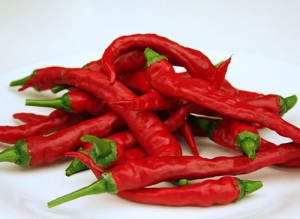
red-chillies


                    Raw Thai Curry Sauce


Makes enough sauce to accompany 2 large helpings of veggies

* 2 avocados
* 2 (dried) lime leaves
* 1/4 – 1/2 fresh chili
* 1 teaspoon of lime juice
* 2 cm of lemon grass stem
* 1.5cm cube of fresh ginger
* 1/2 loosely packed cup of fresh coriander (cilantro)
* 1/2 – 1 cup of pure water (depends on how creamy and thick you like it)
* 1/2 Tablespoon of curry powder

Directions

1) Simply blend all ingredients together, either in a blender or food processor until everything is fully blended. Taste test. Add more water if you’d like it runnier. Add more lemon, a tomato and/or avocado if it’s too hot.

Tips:

* Great veggies (all finely chopped or cubed) to pour the sauce over include: Cauliflower, broccoli, mushrooms, green beans, peas, sugarsnap peas, courgette (zucchini), asparagus tips, tomatoes, cucumber.
* To improve/ soften texture of your veggies you can either marinade them for a while in olive oil, lemon juice and a little Himalayan salt and drain before coating with sauce, or, after marinating for a short while, dehydrate them at around 110 deg F for a few hours to get them soft, warm and slightly mushy!
* To make “rice” simply put in a couple of parsnips or some cauliflower into your food processor and process until rice-like pieces are formed. Even if you don’t like either on their own (I am *really* not a fan of raw parsnip!), by the time you have added your veggies and sauce, you won’t even be able to tell what the rice is and you’ll feel as if you’re eating a much “rounder” me

Monday, 12 September 2016

CHIA Sprouting


Picture of Sprouting Chia and Other Small Seeds


I have been an advocate of Chia for quite sometime, it is a marvellous tiny little seed that can be used in so many different ways and of course its health benefits are an added bonus. I use it in many recipes often to replace flax seed, flax is highly recommended for its omega3 content & chia actually has many of the same properties; I find flax seed tends to have a strong flavour whereas chia takes on more the flavour of the dish, so for this reason alone, it is one of my "go to" ingredients. I often use it as a substitute for eggs in a recipe, its glutinous response to being soaked in almond milk or even fruit or veggie juice allows my imagination to run wild in the many ways it can be added to the diet. Many use it as an excellent breakfast dish or desert, by adding milk or juice, perhaps adding some cacao & nuts with berries & cashew cream on top. Yum.......I hadn't considered sprouting it until I read the article below, not sure why apart from the fact I imagined the mucilaginous seeds would immediately become gluggy. All seeds can be sprouted under the right conditions I'm sure, so I thought you too might like to try this method too. This could also be used for radish seeds or other tiny seeds to enhance their health benefits.
Chia Seeds actually got their name from the Mayan word for "strength". In ancient athletic competitions, indigenous people in South America would sustain themselves on 1 or 2 tablespoons of chia seeds mixed with a little water for over 24hrs. The seeds are storehouses of nutrients & contain even higher sources of essential fatty acids than flax seed or salmon.


With Thanks to the Hippocrates Clinic for this interesting article on how to sprout Chia Seeds & enhance their nutritive value. Brian Hetrich, Greenhouse Manager


Chia sprouts are loaded with antioxidants which have strong immune-boosting properties which may help fight the common cold and flu. According to research from the University of the Valley of Guatemala, chia seeds have a remarkable antioxidant rating of over 1900. This is a higher antioxidant rating than blackberries, mango, noni fruit, grapes, and pineapple without all the fructose.

All of the energy stored inside the seeds is ignited by the sprouting process. The vitamin, mineral, enzyme, and phytonutrient content in the seed explodes when sprouted. The baby sprouts have 4 to 6 times the nutrient value of the leaves from the mature plant.

Here is how to sprout chia:

Soak an 8” unglazed terra cotta saucer in water for 2 hours. Drain.
Lightly sprinkle ½ teaspoon of chia seeds in the saucer. Evenly distribute the seeds leaving some space between each seed.
Mist with water.
Cover with a dinner plate.
Mist twice a day for seven days. The cover plate is not needed after day three.


Saturday, 18 June 2016

For this post I would like to honour my teacher, Cherie Soria; Cherie has had a great influence on my life and ultimate food choices. She has written a number of books highlighting Raw Vegan Recipes & a recent change in direction, suggests online Chef trainings rather than having to travel across to the Living Light Institute on the West Coast of America to qualify as an International Gourmet Raw Chef. I must say spending time with Cherie during my training was definitely a highlight, but there is now another way to equally benefit from her wisdom.
Cherie posted this information online sometime ago, but I thought my readers may also like to read it as it gives a very simple guideline to improve ones health.


Boost Nutrition with Healthy Choices
 
Basically, there’s nothing that nourishes the body and makes you feel better than nutrient-dense raw fruits and vegetables.
 
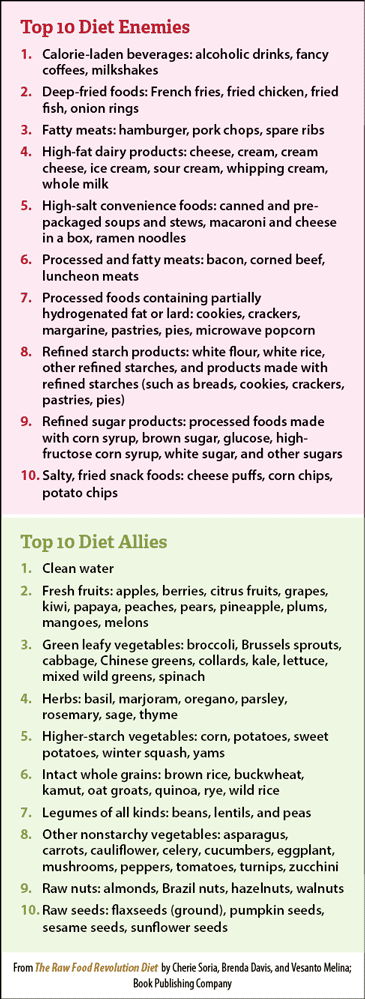
Top 10 Diet Enemies - Top 10 Diet Allies
 
Raw Food Recipe
Dairy-Free Pesto Sauce
 
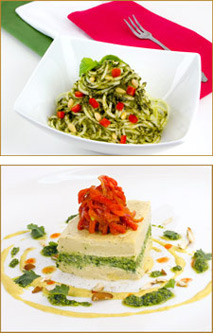
Zucchini with Basil Pesto and Almond Cheese TorteDid you know that you can make a delicious Dairy-Free Pesto Sauce that’s as versatile as the herbs and greens in your garden or at the market? It’s wonderful on raw pasta, or to spread on raw or gluten-free crackers or bread. If you like to include some cooked grains in your diet, add a spoonful of fresh pesto and some chopped, fresh vegetables on top of your grains for a burst of flavor!
 
Blend together your herbs of choice, with some pine nuts, olive oil & lemon juice, some salt & pepper & you have a beautiful pesto!
 
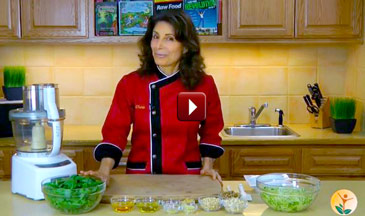
Cherie Soria makes Dairy-Free Pesto
Thank You Cherie, for the impact you have had on so many lives choosing a healthier Lifestyle.
 

Monday, 23 May 2016

Lucuma......perhaps a healthier answer for "sugar lovers".

Do you like the sound of a superfood that is naturally sweet and incredibly good for you? I am forever surprised these days at the abundance & variety of World foods becoming available for many foodies when they are not locally grown in our own Country. The willingness to explore new tastes & recipes brings such a richness to a multi cultural society, & here in Australia we are blessed with such an opportunity.

Human taste buds are naturally primed to love sugar! I find it interesting that from an evolutionary perspective, sweet flavors are nature’s way of signalling low toxicity and a good source of energy in plants. So for those living in the wild, sweetness was somewhat of a compass for finding safe food.

While our love of all things sweet may have helped our ancestors to survive in harsh conditions, our modern intake of sugary foods creates a lot of issues for our health. Sugar seems to have crept into our diets in such quantities in the Western World that healthier solutions need to be found if we wish to live longer in healthier bodies.

Here is a chance to discover a superfood that is naturally sweet and nourishes your body… we’re talking about none other than lucuma, and the benefits it can offer to your health and culinary pleasures!

What Is Lucuma?

Pronounced “loo-koo-mah”, this exotic fruit is cultivated in Peru and has been eaten in South America since 200 AD.

The taste of lucuma has been described in various forms of lick-your-lips deliciousness! Some people report that it’s a blend of pear, mango & sweet potato.The lucuma fruit has green skin with the inner flesh the same golden hue as a hard-boiled egg yolk; it has a large seed in the middle similar to an avocado.

Once upon a time, lucuma was used by ancient South American people for natural healing, and was believed to have antifungal, antibiotic and antimicrobial qualities. Ancient transcripts also indicate that lucuma was thought to help digestion.

Why Is It Good For Me? 

Lucuma is affectionately referred to as the ‘Gold of the Incas’ by local Peruvians, and has been revered as a staple food and sacred offering for many centuries.


Here’s 5 reasons why you’ll love lucuma, too!

1. It Has A Naturally Low GI

You can avoid blood sugar highs and lows by choosing foods with a naturally low Glycemic Index (GI), such as lucuma! This means that the carbohydrate is broken down into glucose and released more slowly, so that your body stays fueled for longer.

Lucuma offers a lovely light sweetness without creating a massive influx of sugar into your bloodstream, the way that sugar does. This way, you can enjoy its sweet flavor and keep your energy and blood sugar levels nice and stable.

2. Lucuma Offers A Major Nutrient Hit

This fruit contains an elixir of 14 trace minerals, as well as many other essential vitamins! In particular, lucuma is a good source of zinc, calcium, vitamin C, niacin (vitamin B3) and iron. As suggested by its brilliant yellow color, lucuma is particularly high in beta-carotene, which our body requires for making Vitamin A and regulating the immune system.

3. A Good Source Of Fiber 

Like most fruit, lucuma is a good source of fiber. Even once it is dried and ground into a superfine powder, we can reap lucuma’s roughage benefits for good digestion & bowel health!

4. It Has An Array Of Antioxidants

Lucuma is rich in many antioxidants which we now know offer widespread beneficial results; it is not generally available in its fresh form in the Western world.
Alternatively, it is delicately dehydrated and powdered before being transported for us to enjoy its rich nutritional benefits. By purchasing high quality, certified organic brands, you can ensure that the fruit has been dried at a suitable temperature to preserve its precious nutrients.


Here’s some other ideas to experiment with.......

Try adding some lucuma to veggie juices, it brings a smooth creaminess to your mix which can help take away the bitterness of some greens.
Lucuma icecream is a real treat & very easy to make. Simply blend up 1/2 cup lucuma powder with 1 cup soaked cashews, vanilla essence, 1/4 cup of coconut nectar, a pinch of salt & a cup of water & freeze......Voila!.....simply delish!
It is worth experimenting with using it in pancakes, tarts, cakes & slices, ( either completely or partially, say a 2:1 mix) but keep in mind it can change the flavour adding a caramel maple type infusion. It is also a delicious additive in smoothies & shakes.

Here's a recipe you might like to try....

Berry Cream Chia Pudding

Scrumptiously energizing

This luscious chia pudding is actually a pretty serious dose of "long lasting energy" all packed into one beautiful and scrumptious breakfast dish that will carry you through the day.
It can also be used as a quick desert; some slices of banana & other fruit on top can be nice, perhaps with some cacao nibs!


1 Cup frozen Blueberries or berries of choice
1 Cup Almond Milk (or nut/seed milk of choice)
2 pitted Medjool Dates, optional for added sweetness
1 Tab Lucuma Powder
1 Tab Vanilla Extract
pinch of Pink Himalayan Salt
¼ Cup Chia seeds

Blend briefly & top with some almonds.

Wednesday, 27 April 2016

Vegan Honey....WHOW!

My husband keeps bees & they are such industrious baby creatures; they are truly fascinating & continuously busy; our bees are very quiet & even tolerant of me lawn mowing around their hives once or twice a year without any upset, to keep the doorway to their homes free of long grass! With Winter not too far away in the Southern Hemisphere, our family will now reserve all honey in their hives for the bees' Winter sustenance, so we are always careful to only use surplus supplies for our own enjoyment. I was observing their activity yesterday & got to wondering about a possible Vegan Recipe; many may not feel comfortable eating honey unless they know the bees are cared for in the best possible way & that their hives are never depleted. For those who don't eat honey & those who are looking for a top up of  honey in their larder over the Winter months, a substitute is at hand.
Vegan honey … is that even possible? Yes it is! Today I show you how two simple ingredients can combine into a sweet and gooey, thick syrup that will fill any honey void you may have as a Vegan.This is a tasty vegan honey alternative that kids and adults all love.


Vegan Pineapple Honey [Gluten-Free]


Serves

1/2 cup

Ingredients

  • 1 cup pineapple juice
  • 1 cup coconut sugar

Preparation

  1. Prepare a pan and stirring spoon. I like to use a non-stick pan so it makes clean up easier.
  2. Pour pineapple juice and sugar into pan.
  3. Turn heat to medium high and bring mixture to a light boil.
  4. Turn down the heat and keep the mixture at a steady simmer. Continue to stir the mixture to keep it smooth and to stop it from burning.
  5. After about 15 minutes you will notice that the mixtures become thick and gooey. Once it reaches the consistency you are happy with, remove the pan from the heat and let it sit for a few minutes.
  6. Pour into a glass jar… YUM!!!

Information from the Internet 

Honeybees

Honeybees live in large "families" and are found all over the world. The honeybee is the only social insect whose colony can survive many years. That is because they huddle together and eat honey to keep themselves alive during the winter months.

Honeybees pollinate more than 100 crops.

Their wings flap 11,000 times per minute, which is why it sounds like they are "buzzing". Honeybees can only sting once, because their stingers are barbed and tear off when they try to get away.

    • Size: 1/2"
    • Shape: Oval, bee shaped
    • Color: Golden yellow with brown bands
    • Legs: 6
    • Wings: Yes
    • Antenna: Yes

    How Bees Make Honey

    It has been said that except for man, nowhere in the world is there anything to compare with the incredible efficiency of the industry of the honeybee. Inside the beehive each bee has a special job to do and the whole process runs smoothly.
    Bees need two different kinds of food. One is honey made from nectar, the sugary juice that collects in the heart of the flowers. The other comes from the anthers of flowers, which contain numerous small grains called pollen. Just as flowers have different colours, so do their pollen.
    Let us go with the honeybee from her flower to the hive and see what happens. Most bees gather only pollen or nectar. As she sucks the nectar from the flower, it is stored in her special honey stomach ready to be transferred to the honey-making bees in the hive. If hungry she opens a valve in the nectar “sac” and a portion of the payload passes through to her own stomach to be converted to energy for her own needs.
    The bee is a marvelous flying machine. She can carry a payload of nectar or pollen close to her own weight. Consider that even the most advanced design in aircraft can only take off with a load one-quarter of its own weight and you’ll appreciate the miracle that the honeybee can remain airborne with such a load.
    Page-3-Honeycomb-pics-cropWhen her nectar “sacs” are full, the honeybee returns to the hive. Nectar is delivered to one of the indoor bees and is then passed mouth-to-mouth from bee to bee until its moisture content is reduced from about 70% to 20%. This changes the nectar into honey. Sometimes the nectar is stored at once in cells in the honeycomb before the mouth-to-mouth working because some evaporation is caused by the 32.5°C temperature inside the hive.
    Finally, the honey is placed in storage cells and capped with beeswax in readiness for the arrival of newborn baby bees. Pollen is mixed with nectar to make “bee bread” and is fed to the larvae. A baby bee needs food rich in protein if the bee community is to flourish.
    Before returning to the flower again for more pollen, the bee combs, cleans and cares for herself ? not because she is vain but so she can work more efficiently. Throughout her life cycle, the bee will work tirelessly collecting pollen, bringing it back to the hive, cleaning herself, then setting out for more pollen.
    Forager bees start out from the hive for blossom patches when three weeks old. As they live to be only six or seven weeks old they have much work to do and little time in which to do it.
    There will be many other bees working at the same time, and the air will be noisy with their droning. It takes 300 bees about three weeks to gather 450 g of honey. On average, a hive contains 40,000 bees.

      Monday, 2 November 2015

      Living Light's Recipe for balancing wonderful Dressings


      I feel blessed to have graduated from the Living Light Culinary Institute in Fort Bragg some years ago & to have been taught by Cherie Soria who is the owner & "guiding light" in all things Raw. Recently they have created some classes online for those who can't make it across to the School in the USA, so it may be worth your while investigating their programmes, if you wish to pursue a Gourmet Chef Training in Raw Food.

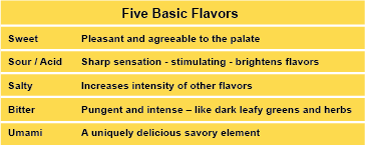
      One of the most important things Living Light teaches is how to create balanced flavors in a recipe. Both seasoned veterans and new people who are just starting to learn how to create raw food recipes need to understand the core principles of the five basic flavors and how to combine them for a balanced dish.


      The ideal is to  create harmony among the various flavor elements so that one element does not “drown out” the others and cause an unbalanced dish. Balancing a recipe goes beyond just taste. When flavors are artfully combined, the entire dish becomes wholly satisfying. The tendency to overeat is much less likely when you enjoy a satisfying, well-balanced dish. In fact, many top chefs serve small portions because they pay careful attention to flavor components, skillfully balance them, and create a dish that is totally satisfying on a variety of levels. At Living Light, they  teach techniques that will help you make perfectly balanced soups, salad dressings, and many other dishes.


      Living Light Dressings


      Some ingredients satisfy two or more of the five elements, so it is easy to create a deliciously balanced salad dressing or sauce with just a few ingredients!


      flavor list


      Saturday, 10 October 2015

      Our World's Resources are Precious


      Let us play our part by Reducing Food Waste

      While it is certainly thrilling and encouraging to live in a country where awareness of food wastage is finally gathering momentum, we need not wait  for others to show a lead  before taking action in our own kitchens. We are often reminded of the extent of the problem when we see the wastage of fresh food in Supermarket bins & Fine eating Restaurants, & it is refreshing to know that volunteers in many areas of community are now utilising excess supplies & wastage caused from over ordering. We see delicious meals being created from good food often thrown out, for those who are less fortunate & do not have the availability, often on a daily basis, of a healthy meal. There is however, an awful lot we can do within our own households to get the ball rolling on this important subject. With all that we now know about the environmental damage, & the massive ongoing need for fresh food & water for all citizens of our Global Family, it is easy to acknowledge that we still have a long way to go to solve the in-discriminant wastage of food & the resources required to produce it. In our own very small way, I believe we can each make a difference, so why not get started right away?

      1. Plan, Plan, Plan

      While it may be tedious to sit down to plan our meals for the week before heading out to the Supermarket, it can be very helpful in reducing food waste. When we know exactly what we should be buying for all of our meals and snacks, we’re less likely to make mindless food decisions and buy things we won’t end up eating. We will also have a plan to use all of the perishables like fresh fruits and veggies before they spoil. If we know they’re going into a stir-fry this Tuesday night, we won’t have to worry about finding them molded in the crisper drawer next Sunday morning. This simple idea alone reduces wastage of food, resources & the budget bottom line.

      2. Compost

       We can put our food scraps to good use in a number of ways.
      Wash the tops of root veggies, the peels & end cuts otherwise thrown in the bin, even the fibre from juicing makes a wonderful broth for soups & casseroles; just boil it all up with some water, herbs & spices & a little salt & the result is a yummy & very cheap veggie broth which can be finely strained & kept in the frig for a few days or otherwise frozen for future use.
      Wilted veggies can be revitalised & used in soups & casseroles too, wash them well but make sure they haven't become spoilt with mould; these would need throwing out!
      Capturing the nutrients we’d otherwise pop in our bin for garbage collection, and saving them instead to feed our flowers, our worm farm or herb garden or even our chooks, is a wise choice to utilize our food waste.There are also home composting units available, which can easily be explored.

      3. Eat Your Leftovers

      Chances are the food we have left over from dinner tonight will still be just as good tomorrow. We can also adjust our thinking to create a new recipe incorporating these leftovers which can have amazing results. Maybe toss those cooked veggies from dinner into a tortilla with beans for a taco or wrap at lunch the next day, or make breakfast smoothies with the leftover fruit salad we have. If we buy or make something, try to eat all of it and resist the urge to toss it.

      4. Help Someone in Need

      Routinely go through our pantry to check dates on our canned beans, dry pastas, and soups. Do we see something in there we might not be able to use within a reasonable amount of time? Food banks would love to take our extra food off our hands and send it home with someone in need.  Donating our food is a much better social and environmental choice than throwing away food or letting it become out dated or decay in the back of our pantry.

      5. Get Preserving! 

      Pickling, drying, canning, and freezing are just a few ways to preserve food and add some flare to them in the process. This can be especially helpful to get the most out of our bumper crops of tomatoes or apples from our home garden before they go to waste. It’s also a great way to get creative with fruits and vegetables, giving our diet some more diversity. Before the raspberries, we bought have a chance to mold, freeze them for pies or smoothies later. And utilize that great sale on apples to make dried apple rings our children can snack on throughout the day.

      6. Use the Refrigerator Wisely

      Not properly utilizing our fridge and freezer can lead to food waste with things spoiling. Set our fridge at the ideal temperature (40 degrees or below which is 5 degrees Centigrade, to prevent bacterial growth), arrange our fridge shelves for optimal safety and freshness, and know which items can be stored in the fridge door where the temperature is warmest. Keeping our food fresh and safe is a great way to reduce waste.

      These are just a few simple ideas, but I'm sure everyone can come up with others to put into use in our homes. Our World needs our help environmentally & sustainably, our Community needs our help in supporting others less fortunate, & in saving water & resources through education & action; the good practices we implement in our homes is a great place to start, as we are also teaching our children respect for our environment & respect for the food that reaches our dining table.

      Tuesday, 29 September 2015

      Seasoning Foods for Health & Flavour


      Ingredients added to food to intensify or improve flavour are called seasonings. Some of the most commonly used ones include Herbs such as oregano, rosemary, coriander, parsley, & basil, Spices like cinnamon, nutmeg, cloves, ginger & all spice, & Condiments like tamari (Soy Sauce) , mustards & vinegars, lemon & of course salt & pepper.
      Have you ever wondered what the difference is between a herb and a spice? Probably not, although perhaps if you only find yourself in the kitchen when absolute necessity strikes or you have takeaway on a regular basis, there may be a query or two if you were asked to define the difference!
      In the simplest of terms… herbs are grown and used for their green parts, the leaves and stalks. Often people end up using them dried for convenience but when used fresh, they can really bring euphoric flavors and seductive aromas to a dish.  By combining different herbs together, you can create many wonderful unique flavors.
      Spices on the other hand are grown for the roots, bark, seeds, fruits and flowers. Spices are concentrated and have a powerful flavor profile which, when used properly, can electrify a dish and please the palate. However, there is such a thing as using too much which can overpower a dish and render it unrecognizable or unpalatable.
      Feel free to use whatever fresh herbs you have in your kitchen or garden.  The key is to mince them up…  "mince well" and "cut pretty small" in a recipe means much the same thing… Make them the perfect size that tend to get stuck in your teeth giving you some “green bling bling” throughout the day if you don't have a friend to draw your attention to the fact!
      Have you ever heard the saying " but veggies are so bland & boring?" Using Herbs & Spices & varying the seasonings add flair to food, so I would love to think you are willing to experiment with combinations you might not normally consider. There are dozens of ways to spice up your culinary life, be adventurous & have some fun, all that "love", "deliciousness" & "creativity" in your dishes adds an undeniable "something" that no other home chef can replicate! 
       
      Here are just a few ideas to try......( you can use a combination,but not all of them in the one recipe!)
      Obviously this is only a tiny whif of the possibilities as the lists could be endless, taste as you go to save overdoing the combinations & to get the balance in your recipe just right.More is not necessarily best, so go easy to start with!
      • With Apples- allspice, cardamom, cinnamon, cloves, ginger, nutmeg
      • With Avocado- cayenne, chili powder, chives, coriander, ginger, paprika
      • With Asparagus- basil, savory, tarragon
      • Home made Savory Breads- caraway seed, celery seed, ground coriander, dill, fennel, oregano, rosemary, sesame seeds
      • Homemade Sweet Breads- allspice, cardamom,chocolate, cinnamon, cloves, fennel, ginger, nutmeg, poppy seeds
      • Chocolate- allspice, cinnamon, cloves, mint, nutmeg, chili
      • Carrots,Cabbage & many of the veggies- allspice, ginger, mint, mustard,basil, turmeric, chives, marjoram, paprika, sesame seeds, cumin, tarragon, curry powder, caraway seed, chili
      • Mushrooms-cardamom, fine herbs like marjoram, oregano, thyme, parsley, nutmeg
      • Spinach- allspice, basil, cardamom, nutmeg, cayenne, sesame seed, ground coriander
      • Tomatoes- basil, allspice, cumin, dill, ginger, mint, nutmeg, oregano, poppy seed, sage 

      God's Garden is so abundant with every possible opportunity to explore, discover, create & include healthy, vibrant, life giving foods in our day to day diet; so many of these herbs & spices have medicinal properties to support our bodies, keeping them free from disease & aging ailments. It is well worth the effort in familiarising ourselves with at least some of the wonderful tastes & combinations of seasonings, herbs & spices that will not only enhance our own health & those we love & cook for, but "will have our friends crying out for more" at potlucks & get togethers.

      May you have every success with your Creations!       

      Saturday, 5 September 2015

      Aging well & enjoying a Healthy Body can start Now!


      When I share some of my ideas about improving ones health, the old adage of "What can I Eat" always seems to come up.......I know as a child in my own household, selection was limited & meat, bread & potatoes were high on the menu listing, as "it filled up empty tummies"! We are so fortunate in many Countries these days, as a wide variety of foods has become common place with Cultural Favourite Recipes being shared with other Nations & enjoyed in restaurants & homes across the World. Medical Science has played its role too, & we now have a much better idea of what foods support health & which ones need to be limited to Celebrations or "sometimes foods".  

      What to Eat…

      Our bodies are high-performance vehicles that need the best fuel possible to ensure maximum performance and long life. Of all the steps anyone can take to look younger, feel more vibrant and joyful, and have clear beautiful skin and healthy hair and nails, one thing stands out among 
the rest — raw plant foods.


      Fresh, ripe, raw, organic, colourful plant foods contribute nutrients important for clear skin, vivid eyesight, a sharp mind and radiant health. Many of these nutrients act as antioxidants, helping protect our cells from free radicals (highly reactive molecules that contain unpaired electrons, which can damage cells and cause premature aging). Let’s take a look at a few high performing fruits and vegetables.

      Deeply coloured foods high in phytonutrients and antioxidants combat free-radical damage and promote good health and healing: always think of your plate representing the rainbow;
      A multiple selection of brightly coloured foods adds interest, variety & health giving properties.
      Dark blue or purple foods: beets, blueberries, blackberries and black mission figs
      Dark green leafy vegetables: collard greens, kale, bok choy, 
broccoli and Napa cabbage
      Yellow-orange foods: squash, peaches, sweet potatoes and carrots
      Red foods: tomatoes, bell peppers, watermelon and strawberries
      Foods high in vitamin C: lemons, oranges, strawberries, papaya, kiwi, broccoli, Brussels sprouts, tomatoes, red bell peppers, romaine lettuce, kale and mustard greens
      Foods containing omega 3 fatty acids: chia seeds, flax, hemp seeds and dark green leafy 
vegetables like kale, romaine and dandelion greens
      Healthy fats & oils; avocado, most nuts especially walnuts, almonds, macadamias, cashew & brazil nuts; olive oil, coconut oil, macadamia & seed oils are all valuable sources for a healthy diet.
      Foods containing zinc: pumpkin seeds, sesame seeds, sunflower seeds, pine nuts and lentils
      Hydrating foods: juicy fruits, non-starchy vegetables, non-chlorinated drinking water and fresh green juice
      Probiotic-rich foods: sauerkraut, grain-free miso and fermented vegetables
      As you can see, these plant foods offer such a wide selection of healthy vibrant foods to choose from, & with almost an infinite variety.

      What foods to ideally avoid....if you choose these, moderation is paramount …

      Animal proteins: meat, eggs, and dairy products 
(raw or cooked)
      Foods high in concentrated sugars (raw or cooked)
      Foods devoid of nutrients: refined wheat and other high-gluten products (pasta, pizza and pastries)
      Fried foods and high-fat foods: vegetable oils, margarines & animal fats
      GMO foods
      Don’t make alcohol consumption part of your daily routine.
      Eat foods that are easy to digest and won’t interfere with sleep, and do not eat anything late at night

      What cooked foods can I include with my Raw Food selection? Obviously many, but here are a few...
      Lightly steamed vegetables: broccoli, yams, and squash
      Non-glutinous ancient grains: quinoa and millet
      Legumes: lentils, adzuki beans and mung beans

      What makes raw food tasty?
      We want contrast and excitement in the foods we eat, whether they are raw or cooked, so include these:
      Pair crunchy and creamy foods together, like crispy cucumbers with guacamole or flax crackers with raw nut cheese
      Contrasting flavours like a sweet and sour salad dressing on bitter greens. Dressings & Sauces can change any meal into an extravaganza so it is well worth gathering a wide selection of home recipes.
      Dramatic, pungent flavours like garlic, onion or chili
      Fresh Herbs not only have medicinal properties but add delicious flavours to many a dish

      It is considered that adding a large variety of Raw Foods to any diet can offer the best quality fuel for good health, healing from disease and anti-aging — and the best part is, they can also be delicious! Why wait until you are old or sick to try to get healthy, when you can enjoy great taste and excellent health NOW?
      Thursday, 27 August 2015

      Choco-Chinos for Rainy Cold Days!


      It is a wet & cold day here as I look out across the fields of home and type up a quick blog to you all. Spring in the Southern Climes is definitely on its way, but just not to-day!
      I have been a bit slack with my blog of late, so thought I would just like to share with you my favourite hot drink for days like to-day.......cacao with some hot water & topped up with some Coconut or Almond milk is my number 1 go to! Some people may like to add a little honey, but I prefer it as it is.
      I have also tried a richer version recommended by a friend, which becomes a bit like a Choco-Chino, & is equally delicious. Add a good teaspoon or more of Cacao to hot water, top it with coconut cream & 1/2 teaspoon or more ( depending on taste) of coconut oil, & blend on high speed.
      Voila....Choco-Chino!
      A few points worth considering about Cacao...........
      •  It is a component of chocolate & researchers suggest it is one of Nature's great nutrients. It comes from raw cacao seeds, a product of the fruit grown on the Cacao Tree.
      • Cacao can increase blood flow to the brain & enhances brain function.
      • It contains a certain compound known to give us feelings of well being.
      • It contains antioxidant flavonoids similar to those found in blueberries, red wine & black & green teas.
      • Cacao stimulates the secretion od endorphins which can produce pleasurable sensations that some people experience when running or jogging.
      • It is a great source of magnesium, assisting in balancing brain chemistry, bone health, heart, beat, blood pressure & cramps.
      • The sulphur compounds in Cacao build healthy hair, shin & nails.
      BUT...........MOST of ALL

      It is Yummy & Delicious when added to Raw Food Recipes, especially Deserts, Cakes & Drinks!

      Thursday, 23 July 2015

      What.......a Vegan Fish Sauce!


      I seem to have a real Yum Yum desire for more Asian inspired meals these
      days. I just love the ginger, garlic, coriander, chili, lime combo with noodles
      ( can spiralise your zucchinis to make fresh noodles if you wish) & all that
      freshness of flavours & veg. Many traditional Asian recipes demand that dreaded
      Fish Sauce as the total answer in acquiring the perfect result, & I have often
      played around tweaking a recipe trying to achieve the desired result without
      the Fish Sauce.
      Well I have finally come across someone else who has come up with a real
      solution, although I am not able to credit the person as she or he remain
      anonymous.
      Here is the Recipe with thanks to the mystery person for solving my dilemma!

      1/2 cup of shredded wakame (sea weed)
      2 cups water
      2 large cloves of garlic
      1 tea whole peppercorns
      1/3 cup mushroom soy sauce
      1 tea dark miso
      Combine Wakame, garlic, peppercorns & water in a saucepan & bring
       to the boil & simmer for 20 mins Strain
      Return the liquid to the saucepan, add the soy sauce & lightly boil until
      reduced. Take off the stove & stir in the miso.

      Decant into a glass bottle, seal & keep in the refrigerator for use.
      Trust me....using this does add another layer of flavour to Asian Dishes,
      so I can only recommend you might like to try it!

      Tuesday, 14 July 2015

      Has this Happened to You?


      I have always loved fruits, salads & raw snacks & although not entirely Raw in my food choices, I can not remember ever being faced with digestive issues; a number of people have recently expressed to me their personal experiences & discomfort in trying to embrace more Raw Food into their Diet. I am told that digestive upsets can be an issue many people deal with on a regular basis and no one seems to want to talk about it, but it’s obviously very important. Digestion isn’t something any of us should be embarrassed about, nor is it apparently an uncommon issue. It’s essentially how our bodies turn food into fuel and how efficiently they do so. Digestive problems are apparently one of the top health problems in our society today with IBS being the number one gastrointestinal complaint.                                                                                                                       It would seem that a fair number of people deal with digestive struggles while transitioning to a plant-based diet, though most of the time these issues get better within a few weeks or months. Some people also transition perfectly and don’t struggle at all; everyone’s body is different & our emotions can play a vital role as well. As a sideline & perhaps "food for thought"....ask ourselves some poignant questions if we are having problems......one question could be..... what in our life are we having trouble accepting or in other words, digesting?                                                                       Gas and bloating may be due to eating too much fiber, while frequent bathroom trips are likely when the body is adapting to eating more fiber-rich, cleansing, natural foods versus animal foods. If you have bloating all the time, you may need to consider laying off the beans, legumes, and the fruits at first or simply minimise the amount of these foods you are eating at any given time.You may also consider eating more pseudograins (quinoa, amaranth, buckwheat or millet) versus typical grains. Although these foods are healthy, they can cause some bloating or fermentation in the digestive tract for many people, so see how they work for you. Smaller meals more frequently works for some so it may initially require some experimentation. Raw foods require more chewing & eating too quickly without adequate chewing can also add an extra burden for our digestive process. .
      Be willing to make changes when necessary and give your body the support it needs. And remember that as the body is a cleaning house, it will take a little time to adjust. So allow yourself to find what foods work best for you initially and implement whatever you need. Emphasize easier-to-digest foods like lightly cooked vegetables and greens if necessary at first, smoothies, porridge, rice, coconut & avocado, root veggies & soups, and be sure you give your body enough healthy & natural fats, vitamins, and minerals. Probiotics & fermented foods are important for our digestive tract as they give the gut extra support, & I am aware that enzyme enriched green papaya has helped many with digestive issues. These challenges are fixable I believe, & need not be the excuse for returning to processed foods, meat & dairy.

      Sunday, 28 June 2015

      Sauces for Flavour


      I just love Sauces & I find any meal can be turned into something delectable with the simple addition of a really flavoursome sauce or dressing. Collecting a repertoire of assorted recipes opens the doorway for a favourite to be whipped up at a moments notice, a few simple ingredients come together in the blender & Voila! .....the whole meal can actually become a mini extravaganza.
      Here are 3 wonderful Sauces to get you started

      Mock Peanut Sauce, makes about a cup
      1/2 cup almond butter
      1/4 cup water
      1 Tab freshly squeezed lemon or lime juice
      2 teas maple syrup
      2 teas tamari
      1 clove garlic
      1/4 inch of peeled ginger root
      Dash of cayenne or Red curry paste
      salt to taste
      Blend all the ingredients well, keeps for 5 days in a sealed container in the refrigerator
      I especially love this sauce as a salad dressing on an Asian inspired salad, as a dip with crudités, or as a sauce on a Thai rice bowl, which might include brown rice, steamed broccoli, shredded red cabbage & carrots & perhaps some sauerkraut. It also goes well with zucchini noodles or pasta

      Creamy Red Pepper Sauce, makes about a cup
      3/4 cup cashews well soaked
      3/4 cup water
      1/2 chopped red pepper
      2 tabs of lemon juice
      1 clove garlic
      1tea onion powder
      1/2 tea Dijon mustard
      1/2 tea salt
      2 tab minced parsley after blending
      Blend everything well & finally pulse in the parsley to mix. Keeps for 5 days in the refrigerator in a sealed jar. I love Creamy Red Pepper Sauce as a salad dressing, but it is also wonderful with some quinoa, lightly steamed kale, ( can keep it raw by massaging with salt & a little olive oil if you prefer) shredded red cabbage & carrots with some chopped hazelnuts sprinkled on top

      Creamy Avocado Lime Sauce, makes about a cup
      1 mashed avocado
      1/2 cup water
      1 tab lime juice
      1/4 tea salt
      Blend & will keep for a couple of days in the refrigerator. Once again great over a crispy salad or with rice & veggies with coriander sprinkled on top

      I suggest you try these 3 Sauces, & then try experimenting further; once you have a repertoire of 5-10 different sauces that you love, you will never again buy dressings & sauces from the Supermarket & you will always have a flavoursome meal that is absolutely delicious. You will notice that each of these have the added bonus of including healthy fats in the recipe & transform salads into a hearty meal.


      Monday, 11 May 2015

      Lentils


      Lentils were not a food that was included in my diet as a child, so it has taken me sometime to really appreciate their versatility & utter deliciousness in many recipes. They are so easy as they don't require soaking & cook much faster than many grains & legumes. They are also very easy to sprout which adds extra nutritional value if the recipe is a Raw one.
      For most households, clever ways to include healthy but cheaper foods & added protein as part of the weekly menu, can be of value, so recognise how marvellous those little lentils can be in stretching the budget when it is called for!
      Lentils work wonderfully in soups & veggie casseroles; they are low in calories & fat & add bulk with good fibre & additional protein to any recipe; they are high in magnesium as well as having a list of other beneficial nutrients for heart health & combine deliciously into a yummy lentil salad or even a side dish.
       Lentils are readily available to purchase in bulk, but it can be a good idea to store them in jars in your pantry with a label stating the variety & cooking instructions, to avoid having to look up how to cook them each time you use them.
      There are many varieties of lentils, ( green, brown, black & red are the most common) the French Green Lentils, Lentilles du Puy, are actually my personal favourite. I love their tasty slightly peppery flavour but all varieties offer similar health benefits & can be cooked & enjoyed in any number of ways.  The Black or Beluga Lentils are the smallest ones with a delicious nutty, earthy flavour which are perfect for whole grain recipes & salads, whereas the Red Lentils whilst the sweetest, are often transformed into a golden puree & added to soups, curries & casseroles.
      I like to rinse my lentils first in a colander, picking out anything that may not be lentil & gathered up in the harvest! I then pop 1 cup of lentils to about 1 1/2 cups of veggie broth or water in a saucepan & bring to the boil, then simmering gently until they are al dante, so checking regularly; if they are overcooked they become mushy which of course is not an issue if you intend blending the recipe, but I find them more enjoyable when they are just a little chewy. Some people remove the saucepan from the stove once the lentils come to the boil, pop a lid on  & let them then sit for 5-10 minutes before serving or adding to a recipe.
      I prefer to sprout them whenever I can, as they then become an excellent addition in many Raw Food Recipes, especially salads; they can also be used sprouted in crackers & breads in a most delightful way, remembering of course that sprouted foods are especially high in nutrients & I believe better than cooked, when you can manage to eat them this way !

      Some Basic Ideas.
      Lentils encourage home cooking, sprouting & creativity & it is very easy to invent your own favourite way of including them in the menu.
      One idea is to add some veggies to the simmering lentils no more than 5 mins before they are cooked or keep a veggie portion of choice, raw, & just add to the lightly cooked or sprouted lentils.

      I suggest as another example, you could do this;

      Chop up & lightly fry these veggies & add to the lentils
      1 cup  onion,
      2 cloves garlic
      1 cup mushrooms
      1 cup celery
      1 cup  carrot
      1cup frozen or fresh corn
      1 cup red pepper
      1 cup kale or spinach
      1 cup fennel

      Once added to the lentils fold through a sauce of your choice

      This could be something along these lines

      Mix together testing for personal flavour before folding through warm veggie lentil mix,

      1 tea salt, more may be required
      1 tab tamari
      1 tea garlic powder
      1 tea ground cumin
      1-2 tab balsalmic vinegar
      1-2 tab olive oil
      1-2 tab rice vinegar
      1 tea curry powder
      1 tea dried mustard
      1/2 tea smoked paprika

      Cooked lentils also go beautifully with buckwheat soba noodles, just add some lightly steamed broccoli florets & leeks or veggies of your choice & dress with olive oil, garlic & ginger for a quick & easy meal.

      ENJOY!


      Wednesday, 29 April 2015

      The Wonders of Tumeric


      Why you should eat turmeric Photo from the Internet


      If you are new to the wonders of Tumeric then there is more to this healing herb than meets the palate.
      You've probably heard of this exotic sounding spice, found mostly in Eastern recipes, so perhaps you have not had the chance to try it.
      Aside from its growing popularity as a cooking herb world wide these days, Tumeric is also known to be one of Nature's most powerful healing herbs. The root of the plant is somewhat similar in appearance to ginger although well recognised by its bright yellow root; it is typically dried & used as a seasoning, most commonly in Indian dishes, but it can now be more readily found in selected Supermarkets & Health Food shops in its fresh form. Internally ingested or outwardly absorbed, Tumeric is a benefit packed wonder herb & can help keep you healthy inside & out. This savoury herb contains a bevy of health benefits including reducing inflammation in the body & assisting the brain to continue functioning efficiently well into old age.
      The bright yellow colour has been known to put some people off using Tumeric as it is well known to stain clothes mercilessly with the slightest drip or splash! An Indian lady once told me to wash the clothing item as usual & lie on the grass to dry & the stain will disappear.......well she is right, it does work brilliantly, so there is no need to be concerned about possible unsightly stains.
      My constant reminder continues however......I strongly believe, through personal experience, that including emotional work in any desire for an extraordinary & healthy life is a vital component & swallowing all the herbs, pills & even great food that God provides for our wellbeing in Nature, is only part of any solution. Honouring the sacredness & gift of life through keeping our bodies healthy & nutritionally supplied with natural whole foods is part of this challenge, but as an example, will not help too much if we are angry, resentful, non forgiving & without compassion, gratitude & love.
      In our household, I add a little Tumeric to some soups & stir fries, dips, curries & veggie dishes. I find it does not have a particularly strong flavour if used in moderation so there is an opportunity to add it to many recipes as an additional part of any diet. I think it would be fair to say however, that I tend to leave it out of recipes when entertaining guests, but this is really not necessary & purely a personal choice I make. I find it does turn the dish yellow without too much encouragement, so in some instances this may need to be considered if presentation is taken into account!


      !

      Friday, 17 April 2015

      Cherie Soria's Healthy Tips


      I am one of Cherie's greatest admirers; she owns the Living Light Culinary Institute where I trained some years ago as a Raw Food Chef & she always breaks knowledge down so simply, so anyone can understand at a glance how best to look after our bodies; I thought you might like to consider some of her dietary suggestions, those healthy choices to include in your diet, and those, when regularly consumed, are more likely to lead to health issues as time goes by. Each & every mouthful is creating & maintaining our bodies, so wisdom is called for if we wish to stay away from Doctors & live a long & healthy life.
      Here are Cherie's guidelines.


      Top 10 Diet Enemies - Top 10 Diet Allies


      There are of course additional factors, other than food, affecting our health, stress being one of them along with unhealed & suppressed emotions; the latter plays a big role & we see this with childhood damage being carried into adulthood & affecting lives in many ways when not addressed.

      Thursday, 9 April 2015

      Close your Eyes & Imagine

      This Blog is somewhat out of the ordinary for me, as I don't usually write so much about any subject, but I hope you will bear with me as I feel it is so important to share some recent revelations.
      Jesus & Mary recently pointed out to our family some very alarming & confronting insights about how we have used animals to support our livelihood & accumulate wealth, whilst at the same time being quite happy to have them eventually mercilessly slaughtered or sold on to other farmers perpetuating the meat industry. Some of our family members are actually Vegans whilst others are Vegetarians, so there is definitely something hypocritical & very wrong here! This confrontational conversation has brought about a number of things including emotional mayhem and delving further into our acceptance in the past of how animals are treated once they leave our farm. "Why would we want to be part of such a atrocious industry" has lead us down a dark tunnel of shame & remorse.

      Please forgive me if I appear to be standing on a podium right now, but this alarming realisation led me further to read Will Tuttle's insightful yet horrifying book "The World Peace Diet" & I must say it has had a profound & sickening affect on me.....anyone still Eating Meat or lingering between being a Vegan or a Vegetarian (not Eating Meat or Fish but still eating Dairy & Eggs) might care to take a look at this book if they desire to be a true Environmentalist & make a real difference in the World.
      I first must make it very clear, that I have been part of a farming family all of my life, I ate meat 3 times a day as a child, & have been regrettably responsible for propagating & earning a living from animals & the meat industry most of my life in some form or other. I do not wish to now become an enraged Vegan, judging others & the atrocities going on in the animal world, as I feel this would be nothing short of hypocritical in my case, but I do believe it is only through education & wanting to know the dark secrets held in Animal Agriculture, that real change can begin to take place. "Wanting to Know & getting out of Denial" is only the 1st step as Jesus pointed out, understanding the whole picture over & above including the choices we place on our dinner plate, will all contribute towards many taking action, emotionally, ethically & morally as well as for better health, a peaceful Planet & a more joyful World honouring & supporting all of Creation.
      I have been Vegetarian on & off for many years, 15 years back in the 90's & 5 years recently, but I have still eaten eggs & dairy when the recipe includes them & I am a "dinner guest", or when emotions kick in & I wish to stuff them down with a dairy delight or a milk coffee as an example! Giving up dairy has been particularly hard, I have found it is totally addictive & is closely related to perceived childhood nurturing for me....I have failed over & over in my efforts as I have been unwilling to engage the process emotionally. I have thought of every reason why it was & wasn't that important in the scheme of things....it's like when you are looking for a green car, all you see are green cars, & all I wanted to see was information supporting my choices! "My body needs the protein when I'm not eating meat" , "it makes it impossible to go out to dinner" " I will be judged as a loony",  "vegan choices are so limiting & I don't know what to cook"  etc etc, has kept me in my addiction & fear of being judged by others.
      After so many conversational revelations & then reading Will's book I can see how blind I have wanted to be to my chosen actions, both on & off the farm & how much I have not wanted to address my emotional baggage, grief & shame or even look at the far reaching ramifications of my actions & why I convinced myself it was all OK. My pride & arrogance in believing I loved animals & the Planet & thought I was an environmentalist having saved water, planted trees, switched off lights, recycled home commodities etc, has finally caught up with me & I have needed not only some deep reflection, but also many emotional realisations. The interconnectedness between how we treat animals by eating them & stealing their eggs & the milk from their babies, is totally reflected back to us in humanity & yet so few are willing to see the connection.
      I will not go into further detail but I hope you will see the connection between this blog & my passion for food, what we choose to put on our plates, & how we treat animals.
      The current state of the World & Humanity is a total reflection & result of our past & current actions. Our dismay at the ongoing wars & terrorist activities, the rage & unloving behaviour that is so prevalent in many of us, the horror of how many women & children are treated so appallingly, the deteriorating health of Nations, the materialism & consumerism particularly of the West, the starvation & homelessness of many, the loss of our rainforests, water resources & animal species, & endless other issues that flood our World, do offer an opportunity for immediate action. The right action will eventually bring about solutions when enough of the World's population says "enough is enough"; by changing our false beliefs & demands & emotional disconnectedness from all life including one another, we can contribute towards the challenge in one small way as an example,  "one bite at a time" through what we purchase and what we put on our plate. People Power is worth remembering & keeping in mind that "As we sow, so we Reap".
      I do hope some of you may be drawn to read Will's book, " The World Peace Diet" ( available from Amazon & most outlets) and that you are perhaps drawn to share it with others.


      Imagine
      "Seeing our eating habits for what they are, and answering the call of our spirit to understand the consequences of our actions, we become open to compassion, intelligence, freedom, and to living the truth of our interconnectedness with all life. There is an enormously positive revolution implicit in this, a spiritual transformation that can potentially launch our culture into a quantum evolutionary leap, from emphasizing consumption, domination, and self-preoccupation to nurturing creativity, liberation, inclusion, and cooperation.”
      ~ The World Peace Diet, Dr. Will Tuttle


      Point of View


      By Shel Silverstein


      Thanksgiving dinner’s sad and thankless,

      Christmas dinner’s dark and blue,

      When you stop and try to see it

      From the turkey’s point of view.

      Sunday dinner isn’t sunny

      Easter feasts are just bad luck,

      When you see it from the viewpoint

      Of the chicken or the duck.

      Oh, how I once loved tuna salad,

      Pork and lobster, lamb chops, too,

      Till I stopped and looked at dinner

       From this other point of view.


      Jesus & Mary's teachings can be viewed and explored on www.divinetruth.com